
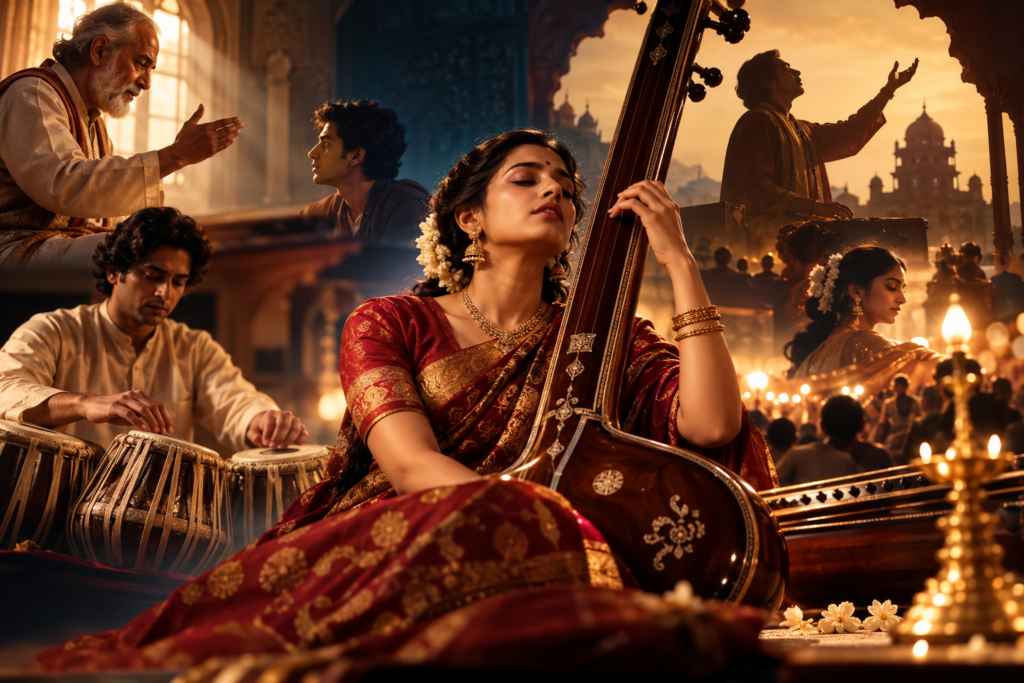
Indian cinema has always shared a deep connection with music, but some films go beyond ordinary songs and place classical music, trained singers, instrumentalists, and musical traditions at the heart of the story. For viewers who enjoy ragas, live performance, artistic rivalry, disciplined training, and the emotional lives of performers, hindi movies about classical music and musicians offer a particularly rewarding viewing experience.
These films explore much more than beautiful melodies. They often show the dedication required to master an art form, the complicated relationship between teacher and student, conflicts between tradition and modernity, and the personal sacrifices musicians sometimes make for their craft. From legendary older films to contemporary dramas, Hindi cinema has produced several memorable stories where music is not simply part of the soundtrack but an essential part of the narrative.
Why Hindi Movies About Classical Music and Musicians Are Special
What makes hindi movies about classical music and musicians different from ordinary musical films is their focus on the artistic journey itself. Instead of using music only for entertainment, these stories often show musicians rehearsing, learning, competing, performing, struggling with expectations, or trying to preserve a musical tradition.
Many such films also introduce audiences to elements of Hindustani classical music, including ragas, vocal training, instrumental performances, and the guru-shishya tradition. Even viewers without formal musical knowledge can appreciate these movies because the emotional themes—ambition, discipline, love, jealousy, identity, and sacrifice—remain universal.
Another attraction is the atmosphere these films create. Classical compositions, traditional instruments, concert settings, and carefully designed performances can make the viewer feel closer to India’s rich musical heritage while still enjoying a dramatic cinematic story.
At the same time, not every film on this list is a documentary-like representation of classical music. Some use classical traditions as a background for romance or family drama, while others focus more closely on the life and psychology of a musician. That variety makes the genre accessible to both serious classical-music listeners and general movie audiences.
Best Hindi Movies About Classical Music and Musicians
Several Hindi films have explored classical music across different generations. Some are remembered primarily for their extraordinary soundtracks, while others stand out because the entire story revolves around musicians, singers, composers, or performers.
The following films are especially worth exploring if you are searching for stories where Indian classical music or the life of a serious musician plays an important role.
Baiju Bawra
Baiju Bawra is one of the most famous Hindi films associated with Hindustani classical music. The story follows Baiju, a gifted singer whose life becomes connected with music, personal loss, love, and artistic rivalry. The film is particularly remembered for music composed by Naushad.
Its classical-based compositions helped give the film a lasting place in Hindi cinema. The dramatic musical contest associated with Baiju and Tansen is one of the best-known examples of classical music being used as a major storytelling device rather than simply appearing between scenes.
For viewers exploring older hindi movies about classical music and musicians, this is an important starting point. Its style reflects the filmmaking conventions of its era, but its musical identity remains central to its appeal.
The movie is also useful for understanding how Hindi cinema once introduced large mainstream audiences to compositions influenced by classical traditions without turning the film into a technical lesson about music.
Basant Bahar
Basant Bahar is another classic Hindi film strongly connected with Indian classical music. The story involves a talented singer, artistic obstacles, personal challenges, and competition, making musical ability an important part of the character’s journey.
The film is remembered for a soundtrack that draws heavily from classical traditions. Its songs are not merely decorative; they contribute to the mood, themes, and artistic identity of the film.
Viewers who enjoy films built around vocal performance may find Basant Bahar particularly appealing. It represents an era when classical-influenced compositions could occupy a prominent place within mainstream Hindi filmmaking.
Although its storytelling style may feel different from contemporary cinema, the movie remains relevant for anyone interested in the historical relationship between Hindustani music and popular Hindi films.
Sangeet Samrat Tansen
As the title suggests, Sangeet Samrat Tansen focuses on Tansen, the celebrated musician associated with the court of Mughal emperor Akbar. The film belongs to the tradition of historical musical dramas in Indian cinema.
Rather than treating music as a minor element, the story places the musician’s artistic identity at its center. This makes it especially interesting for audiences searching for films inspired by famous figures from Indian musical history.
The film also reflects cinema’s long-standing fascination with Tansen as a symbol of extraordinary musical talent. Stories about him have often blended history, legend, devotion, and artistic imagination.
For modern viewers, the film can be approached both as a musical drama and as an example of how earlier Hindi cinema represented iconic musicians and classical traditions on screen.
Sur Sangam
Sur Sangam explores the tension between traditional classical music and changing cultural tastes. The story focuses on a classical musician deeply committed to his art and the values associated with his musical tradition.
This conflict between preserving artistic purity and adapting to a changing world gives the film more depth than a simple performance-based story. It raises questions that remain relevant today: How should traditional arts survive? Should musicians change with popular taste, or should they protect established forms?
The film is especially suitable for viewers interested in the cultural side of classical music. It examines not only performance but also the pride, discipline, identity, and responsibility connected with maintaining an artistic tradition.
Among hindi movies about classical music and musicians, Sur Sangam stands out because of its concern with the survival and transmission of classical culture across generations.
Sardari Begum
Shyam Benegal’s Sardari Begum offers a more complex and character-driven exploration of a female singer and the personal choices surrounding her musical life. Rather than presenting the musician only as an idealized artist, the film looks at relationships, family tensions, social expectations, and independence.
The musical world is closely tied to the central character’s identity. This gives the film a different tone from traditional musical dramas built around competitions or miraculous talent.
The story is particularly interesting for viewers who want to see how artistic ambition can collide with conventional expectations placed on women. It treats the musician as a complicated human being rather than simply a performer.
Because of this psychological and social dimension, Sardari Begum works well for viewers who prefer serious drama alongside music.
Saaz
Saaz centers on two sisters whose lives are connected with singing and the professional music world. It explores creative ambition, rivalry, relationships, recognition, and the pressures surrounding artistic careers.
The film is not limited strictly to classical music, but its focus on professional singers and the emotional cost of a life devoted to music makes it highly relevant to anyone interested in musician-centered Hindi cinema.
One of its strengths is that it does not romanticize every aspect of artistic success. Talent can bring fulfillment, but competition and personal conflict can complicate relationships.
For viewers interested in the personalities behind musical performances rather than only the performances themselves, Saaz provides a more intimate perspective.
Hum Dil De Chuke Sanam
Hum Dil De Chuke Sanam is primarily known as a romantic drama, but Indian classical music plays an important role in its setting and early narrative. The character of Sameer arrives to study music under a respected teacher, bringing the guru-student relationship into the story.
The film combines romance, family relationships, colorful visual storytelling, and music. Classical training is not explored as deeply as it is in some older specialist musical films, yet it provides an important cultural foundation for the characters and their relationships.
This makes the movie a good choice for viewers who want a mainstream Hindi film with classical musical elements rather than a story focused entirely on technical musical training.
Its soundtrack and performance sequences also make it accessible to viewers who may be new to films connected with traditional Indian music.
Khamoshi: The Musical
Khamoshi: The Musical tells the story of a young woman with a passion for music growing up in a deaf family. Music becomes closely connected to her dreams, identity, relationships, and emotional expression.
The film is not specifically centered on Hindustani classical music, so viewers seeking only strict classical-music narratives should keep that distinction in mind. However, it remains an important Hindi film about the emotional meaning of becoming a musician.
Its central contrast between sound, silence, family duty, and artistic aspiration gives music a symbolic importance throughout the story.
For audiences looking for broader movies about singers and musicians, it offers an emotional alternative to films focused on traditional classical performance.
Rockford and Other Music-Centered Alternatives
Not every movie involving musicians belongs within the classical-music category. Hindi cinema includes many films about singers, composers, bands, playback music, or contemporary performers, but their themes can still appeal to people who enjoy artist-centered stories.
Movies involving modern music can serve as alternatives after exploring classical-focused titles. The important distinction is that films about musicians are a broader category, while films about Hindustani classical traditions form a more specialized group.
Understanding this difference helps viewers choose movies according to their interests. Someone fascinated by ragas and traditional training may prefer Baiju Bawra or Sur Sangam, while someone more interested in the emotional life of a performer may enjoy Saaz or Khamoshi: The Musical.
This variety is one reason music remains such a strong storytelling subject in Hindi cinema: different musical worlds can produce completely different kinds of stories.
Themes Common in Hindi Movies About Classical Music and Musicians
One recurring theme in hindi movies about classical music and musicians is the relationship between talent and discipline. Classical music is usually presented as something that requires patience, repeated practice, guidance, and long-term commitment rather than instant success.
Another important theme is the guru-shishya relationship. Traditional learning often involves more than formal instruction. Respect, trust, discipline, and the transmission of knowledge become part of the emotional structure of the story.
Generational conflict is also common. Older musicians may want to protect traditional forms, while younger characters are tempted by popularity, experimentation, changing audience preferences, or modern opportunities.
Finally, these movies frequently explore sacrifice. Artists may struggle between music and family, recognition and integrity, personal relationships and professional ambition, or tradition and individual freedom.
Classical Music Versus Modern Music Films
Classical-music films usually focus on training, tradition, performance discipline, heritage, or artistic rivalry. The musician’s relationship with the art form is often treated seriously, and musical knowledge may shape the plot itself.
Modern music films tend to focus more on commercial success, bands, recording careers, fame, youth culture, or contemporary performance. Both categories can explore ambition and creativity, but their cultural settings and musical concerns are usually different.
Neither style is automatically better. A viewer interested in Indian musical heritage may find classical dramas more rewarding, while someone interested in the entertainment industry may prefer films about modern singers or bands.
The best approach is to treat them as complementary genres. Together, they show how Hindi cinema has portrayed musicians in very different social and artistic environments.
What Viewers Can Learn From These Films
These films can introduce viewers to the cultural importance of classical music without requiring previous musical knowledge. Terms such as raga, guru, training, performance, and artistic discipline become easier to understand when they are connected with characters and emotional situations.
They can also encourage viewers to explore the real music behind the cinema. After hearing a classical-influenced composition in a film, a curious listener may want to discover traditional vocalists, instrumentalists, gharanas, or specific ragas independently.
However, movies should not be treated as complete educational resources. Cinema often dramatizes events, simplifies musical concepts, or prioritizes storytelling over technical accuracy.
Anyone who wants to learn classical music seriously should use films for inspiration and cultural appreciation while relying on qualified teachers, authoritative books, recordings, and educational resources for formal learning.
How to Choose the Right Classical Music Movie
If you are completely new to older Hindi cinema, starting with a film that combines strong drama and memorable music can make the experience easier. Baiju Bawra, for example, offers a recognizable dramatic structure while keeping music central to the story.
Viewers mainly interested in tradition and cultural conflict may prefer Sur Sangam, while those interested in complex characters and social issues may find Sardari Begum more rewarding.
You should also consider the filmmaking period. Older movies often have slower pacing, theatrical dialogue, and different visual conventions compared with contemporary cinema.
Approaching them with the expectations of their era makes the experience more enjoyable. Instead of comparing every old film with modern production styles, focus on the performances, compositions, characters, and ideas about music that the film is trying to explore.
Why Classical Music Works So Well in Hindi Cinema
Classical music naturally creates dramatic possibilities because performance itself involves emotion, preparation, vulnerability, and judgment. A musical competition can become a dramatic confrontation, while a rehearsal can reveal determination, insecurity, admiration, or rivalry.
Music also allows filmmakers to communicate feelings that dialogue cannot express easily. A character’s relationship with a particular composition or performance may reveal grief, devotion, love, pride, or frustration without requiring lengthy explanation.
Indian cinema has an additional advantage because songs have long been integrated into mainstream storytelling. Audiences are therefore accustomed to music carrying narrative and emotional meaning.
When filmmakers build an entire story around musicians, that familiar cinematic language can become even more powerful.
Frequently Asked Questions
Which Hindi movie is famous for classical music?
Baiju Bawra is one of the best-known Hindi films strongly associated with Hindustani classical music. Its story revolves around a gifted singer, and music composed by Naushad plays a major role in the film’s identity and dramatic impact.
It is often a good starting point for viewers who want an older Hindi musical drama where classical-style singing is closely connected with the plot.
Are there Hindi movies based on famous classical musicians?
Yes. Hindi cinema has produced films involving historical or legendary musical figures, including stories centered on Tansen. Some films also use fictional musicians to explore real traditions of classical training and performance.
Historical musical films should still be viewed as cinematic interpretations rather than replacements for biographies or academic sources, since dramatic storytelling may combine historical material with legend or fictional elements.
Is Hum Dil De Chuke Sanam a classical music movie?
Hum Dil De Chuke Sanam contains an important classical-music setting, particularly because Sameer comes to learn music from Nandini’s father. Classical training therefore helps establish the story and relationships.
However, it is primarily a romantic and family drama rather than a detailed film about the technical practice of classical music.
Which Hindi movie shows the struggle of a classical musician?
Sur Sangam is a notable choice because it explores the life and values of a musician committed to classical tradition while facing a changing cultural environment.
Other films such as Sardari Begum examine different kinds of artistic struggle, including the personal and social pressures surrounding the life of a performer.
Can these movies help me learn Indian classical music?
They can help you appreciate the atmosphere, traditions, emotions, and cultural importance surrounding classical music, but they cannot replace formal musical instruction.
For actual learning, it is better to study with a trained teacher and use reliable educational material while treating movies as inspiration and cultural exposure.
Conclusion
The best hindi movies about classical music and musicians show that music can function as far more than background entertainment. Films such as Baiju Bawra, Basant Bahar, Sur Sangam, Sardari Begum, and Saaz use the lives of singers and performers to explore discipline, ambition, tradition, rivalry, family expectations, and artistic identity.
Whether you already enjoy Hindustani classical music or simply want meaningful films about people devoted to their art, these movies offer several different starting points. Some celebrate traditional performance, others examine the pressures faced by musicians, and a few combine musical culture with romance or social drama. Together, they reveal why stories about music and musicians continue to hold such an important place in Hindi cinema.