
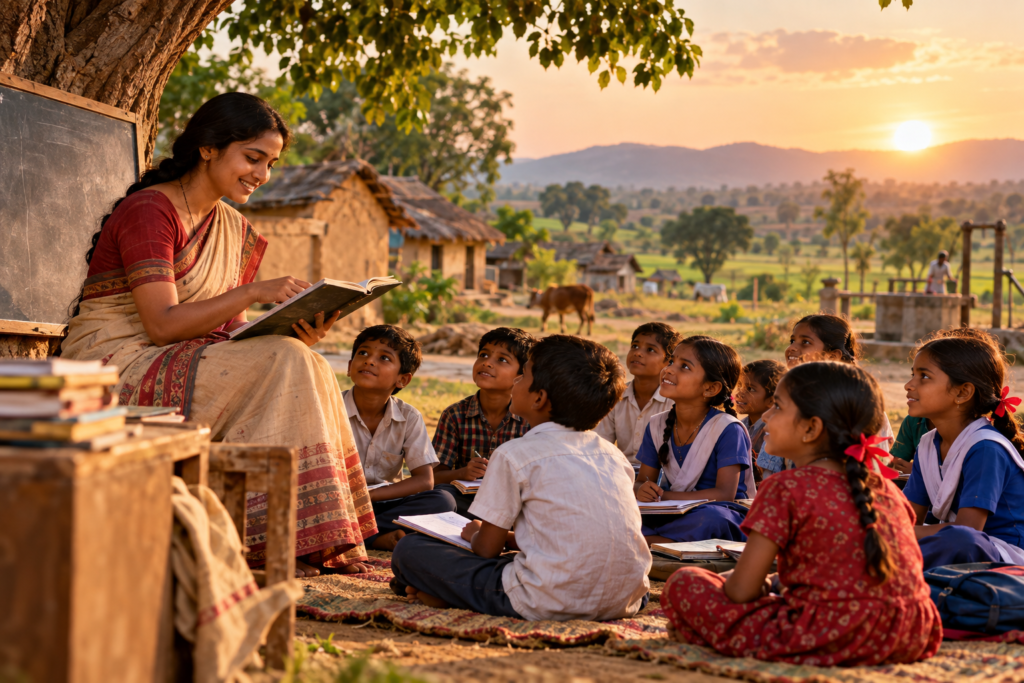
Bollywood has often used education as more than a classroom subject. In many Hindi films, learning becomes connected with poverty, social inequality, family expectations, caste barriers, personal ambition, and the hope of building a better future. This is especially meaningful when stories are set in villages or among families with limited access to quality schooling.
For viewers searching for bollywood movies about village education, there are a few films that directly explore rural schooling, while others focus more broadly on underprivileged children and families struggling to access education. This guide looks at both types, while clearly explaining which movies are genuinely centered on village education and which are related educational dramas.
Why Bollywood Movies About Village Education Are Worth Watching
Stories about rural education can show problems that are difficult to understand through textbooks alone. A village school may face challenges involving enrollment, poverty, social traditions, gender expectations, lack of motivation, or families who cannot afford to keep children in education. Films can make these issues easier to understand by presenting them through individual characters and everyday situations.
At the same time, these movies are not only about hardship. Many focus on teachers, parents, children, and community members who believe education can create new opportunities. The strongest bollywood movies about village education combine social issues with personal stories, which makes them useful for students, teachers, families, and anyone interested in rural development.
Best Bollywood Movies About Village Education and Rural Schooling
Not every Hindi film about education takes place in a village, so it is important to separate direct matches from movies that simply share similar themes. Swades and I Am Kalam are particularly relevant because rural life and access to education are important parts of their stories.
Other films such as Pareeksha and Nil Battey Sannata are not strictly village-school movies, but they explore educational inequality, affordability, ambition, and the difficulties experienced by families with fewer resources. Together, these films provide a wider picture of how Hindi cinema has approached education and opportunity.
Swades
Swades is one of the clearest choices for anyone searching for bollywood movies about village education. The story follows Mohan Bhargava, an Indian professional living in the United States who travels to the village of Charanpur. There he meets Geeta, who runs a local school and believes strongly in education, including education for girls and disadvantaged children.
Education becomes part of the film’s wider discussion about village development and social responsibility. Mohan helps encourage families to send children to school, while the story also shows how caste attitudes, gender expectations, and economic difficulties can affect educational participation. The film therefore connects schooling with broader questions about community progress rather than treating education as an isolated issue.
I Am Kalam
I Am Kalam focuses on Chotu, a boy from a poor family who works at a roadside dhaba and dreams of receiving an education. Inspired by former Indian President A.P.J. Abdul Kalam, he begins imagining a future beyond the economic circumstances into which he was born. The story places education at the center of his desire to improve his life.
The film is especially relevant to discussions of rural and underprivileged education because Chotu’s circumstances keep him away from formal schooling even though he is curious and eager to learn. His story highlights the difference between a child’s ability and the opportunities actually available to that child. It also shows how encouragement, friendship, and access can influence educational possibilities.
Pareeksha
Pareeksha approaches education through the story of Buchchi, a rickshaw driver who wants his son to receive a better education. The film examines the difficulties a low-income family faces when trying to access schooling associated with greater opportunity and social mobility.
Although it is not primarily a traditional village-school story, it fits naturally beside other bollywood movies about village education because it asks a similar question: should a child’s educational possibilities depend on family income or social background? The film also draws attention to the pressure parents may experience when they see education as their child’s main route toward a different future.
Nil Battey Sannata
Nil Battey Sannata tells the story of Chanda, a working single mother, and her daughter Apeksha, who has little interest in studying because she assumes her future will be limited by the family’s financial circumstances. Chanda becomes determined to change her daughter’s attitude toward learning and eventually joins the same school herself.
This is not a village-centered film, so it should be viewed as a related recommendation rather than a direct rural-education movie. However, its themes are closely connected with the search intent: poverty, educational motivation, parental sacrifice, social expectations, and the idea that a person’s background should not automatically determine their ambitions.
Common Themes in Bollywood Movies About Village Education
One recurring theme is access. A child may want to study but face obstacles that have little to do with intelligence or effort. Family income, distance from school, social traditions, work responsibilities, or unequal opportunities can influence whether education remains realistic. Movies such as I Am Kalam make this conflict personal by showing a capable child whose circumstances interfere with formal schooling.
Another major theme is community attitude. In films such as Swades, improving education requires more than simply having a school building. Families and community members must also believe that children should attend, including girls and children from socially disadvantaged groups. This makes education a social issue as well as an individual one.
Poverty and Educational Opportunity
Financial hardship is one of the most visible barriers in education-themed Hindi cinema. Some children must work, while other families worry about school fees, books, transportation, or the long-term cost of further education. These stories often show how economic pressure can reduce a child’s choices even when the family values learning.
Films such as Pareeksha and Nil Battey Sannata explore this problem from a parent’s point of view. Parents may recognize education as valuable but still struggle to provide the opportunities they want for their children. This creates emotional tension without reducing education to a simple message that hard work alone solves every problem.
Girls’ Education and Social Expectations
Village education is closely connected with questions about girls’ schooling. In some communities, families may prioritize household responsibilities, early marriage expectations, or traditional gender roles over continued education. Films dealing with rural development can therefore use girls’ education as a way to examine larger changes in community attitudes.
Swades addresses this issue through Geeta’s commitment to schooling and gender equality. Her role demonstrates how a local educator can influence more than academic learning. By encouraging families to think differently about who deserves education, the character connects the classroom with wider ideas about independence and opportunity.
Teachers, Parents, and Community Support
Educational success in these films rarely depends on students alone. Teachers, parents, mentors, friends, and community leaders often determine whether a child receives encouragement or encounters another obstacle. This is important because it presents education as a shared responsibility rather than something children must achieve without support.
The difference can be seen across several films. Chotu in I Am Kalam needs people willing to recognize his potential, while Apeksha in Nil Battey Sannata has a mother who refuses to accept the idea that poverty should define her daughter’s future. These relationships make education feel personal rather than abstract.
What Bollywood Movies About Village Education Can Teach Viewers
One useful lesson from these movies is that enrollment and learning are not always the same thing. A school may exist, but children still need supportive teachers, family encouragement, social acceptance, and realistic opportunities to continue their studies. Looking at education through this wider lens helps viewers understand why improving rural schooling can involve an entire community.
These films can also encourage discussion about dignity and aspiration. Children from economically weaker families are sometimes expected to limit their ambitions according to their parents’ occupations or social position. Education-focused cinema challenges that assumption by showing characters who want the freedom to imagine different futures.
Bollywood Movies About Village Education for Students and Teachers
Students can watch these films as introductions to topics such as educational inequality, rural development, child labour, gender equality, poverty, parental expectations, and social mobility. They are particularly useful when followed by classroom discussion because films often simplify complex issues and should not be treated as complete representations of every rural community.
Teachers can use selected scenes or themes to start conversations rather than presenting a movie as documentary evidence. For example, Swades can support discussion about community participation and girls’ education, while I Am Kalam can open a conversation about child labour and barriers faced by children who want to study.
Questions to Discuss After Watching
A useful discussion can begin by asking what actually prevents a character from receiving an education. Students can consider whether the main problem is money, social attitudes, lack of access, family pressure, discrimination, personal motivation, or several factors working together.
Viewers can also ask who helps solve the problem and whether the film’s solution would work in real life. This encourages critical viewing and helps separate an emotionally satisfying movie ending from the long-term work required to improve education in real communities.
How These Films Differ From Typical School Movies
Many popular Hindi education films are based in urban schools, coaching centers, colleges, or middle-class families. They may explore examination pressure, learning disabilities, competition, teaching methods, or the relationship between students and teachers. Those subjects are valuable, but they are different from the challenges associated with rural access to education.
Bollywood movies about village education usually place stronger emphasis on basic access, poverty, social restrictions, and community participation. The central question is often not simply whether a student will score well, but whether that student will be able to attend school, continue studying, or receive the same opportunities as children from more privileged backgrounds.
How to Choose the Right Village Education Movie to Watch
Choose Swades if you want a story where education is connected with village development and community change. Choose I Am Kalam if you prefer a child-centered story about ambition, poverty, and the desire to attend school. Both provide strong starting points for viewers specifically interested in rural education.
For a wider look at educational inequality, Pareeksha and Nil Battey Sannata are useful companion films. They move beyond the village setting but explore related questions about money, parental sacrifice, social class, motivation, and whether children from low-income families receive equal chances to pursue their goals.
Frequently Asked Questions
What are the best Bollywood movies about village education?
Swades and I Am Kalam are two of the most relevant choices. Swades includes a village school, enrollment challenges, girls’ education, and community development, while I Am Kalam follows an underprivileged child who strongly wants an education despite difficult circumstances.
Viewers interested in similar themes can also consider Pareeksha and Nil Battey Sannata. These are not strictly village-school films, but they explore educational inequality, poverty, parental sacrifice, and the importance of keeping educational ambitions alive.
Is Swades a movie about village education?
Education is an important part of Swades, although it is not the film’s only subject. Geeta runs a school in Charanpur, and the story includes efforts to increase school enrollment and encourage education among girls and disadvantaged communities.
The film also explores electricity, poverty, caste divisions, migration, and community responsibility. For that reason, it is better described as a village-development drama in which education plays a significant role rather than a film focused exclusively on classroom life.
Which Hindi movie shows a poor child wanting to study?
I Am Kalam is a strong example. Its young protagonist, Chotu, works at a roadside dhaba but wants to learn, attend school, and create a different future for himself. His ambition becomes stronger after he is inspired by A.P.J. Abdul Kalam.
The movie is useful because it shows that lack of schooling does not necessarily mean a lack of intelligence or interest. Chotu’s difficulties come largely from economic and social circumstances rather than an unwillingness to learn.
Are there Bollywood movies about girls’ education in villages?
There are Hindi films that touch on girls’ education as part of broader stories about rural development. Swades is a notable example because Geeta supports education and gender equality while working to improve schooling in the village.
However, viewers should know that relatively few mainstream Bollywood films focus exclusively on girls’ village schooling from beginning to end. Many relevant films combine girls’ education with themes such as poverty, community attitudes, social inequality, and family expectations.
Can Bollywood movies about village education be used in classrooms?
Yes, they can be useful for discussion when teachers provide appropriate context. Movies such as Swades and I Am Kalam can introduce subjects including rural development, school access, poverty, gender expectations, child labour, and educational opportunity.
They should not be treated as complete factual representations of rural India. Films are dramatic stories, so the most productive approach is to compare what happens on screen with reliable educational research, local examples, or classroom material.
Conclusion
The most meaningful bollywood movies about village education do more than show children sitting in classrooms. They explore why education matters, who gets access to it, what prevents children from continuing their studies, and how parents, teachers, communities, and social attitudes can affect a student’s future.
Swades and I Am Kalam are especially relevant for viewers looking for rural education stories, while Pareeksha and Nil Battey Sannata broaden the discussion to educational inequality and low-income families. Together, these films offer engaging ways to think about learning, opportunity, dignity, and the role education can play in changing individual lives and communities.